

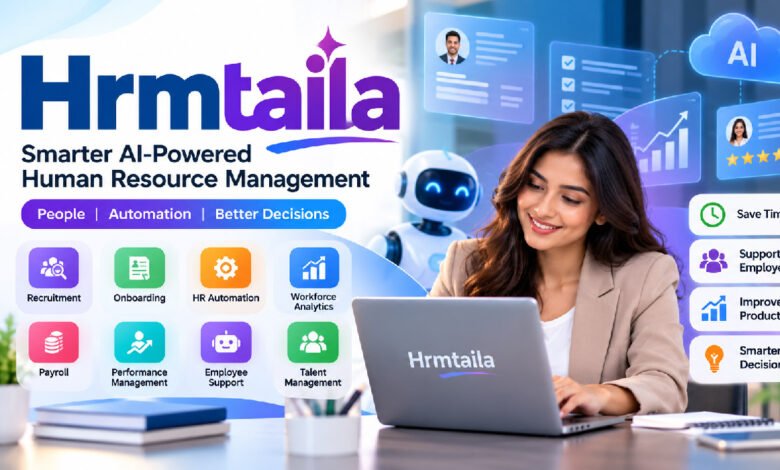
Hrmtaila is an emerging online term connected with artificial intelligence and human resource management. It is mainly used in discussions about AI-powered recruitment, HR automation, employee support, workforce analytics, onboarding, and other parts of modern human resource technology.
The term is still developing. Current online references do not clearly establish Hrmtaila as an official software company, recognized HR standard, or widely documented commercial platform. It is more accurately understood as a developing concept linked with the growing use of AI in HR.
Understanding this difference is important. AI-powered HR technology is already real and widely used, but specific claims about Hrmtaila should not be treated as confirmed product features without reliable evidence. This guide explains the meaning, applications, benefits, risks, privacy issues, and future possibilities connected with Hrmtaila.
What Is Hrmtaila?
Hrmtaila can be understood as an emerging term for the use of artificial intelligence in human resource management. It connects AI, automation, digital HR systems, cloud technology, and workforce data to make everyday HR work faster and easier to organize.
The basic idea is simple. Human resource teams manage hiring, onboarding, employee records, attendance, leave, training, performance, payroll information, and employee questions. Many of these activities include repeated administrative work that software can help manage.
However, Hrmtaila does not currently have one official definition. Recent online explanations generally connect it with AI-assisted HR rather than a clearly established product or industry standard. For this reason, it is better to understand Hrmtaila as a developing technology concept rather than assume that every feature discussed online belongs to one specific platform.
Where Did the Hrmtaila Term Come From?
The exact origin of Hrmtaila remains unclear. There is no widely recognized company, developer, industry organization, or research institution that has publicly confirmed that it created the term. Its earliest meaning therefore cannot be described with certainty.
The first three letters, “HRM,” are commonly used as an abbreviation for Human Resource Management. This makes its connection with human resources easy to understand. The rest of the word is sometimes associated online with artificial intelligence, although there is no confirmed creator explaining the complete name.
This uncertainty is important because online terms can spread quickly. One website may publish an interpretation, and other websites may later repeat a similar explanation. Repetition does not automatically make a definition official. Until reliable primary information becomes available, Hrmtaila should be described carefully as an emerging keyword associated with AI-driven human resource management.
Is Hrmtaila a Real HR Software Platform?
There is currently not enough reliable evidence to describe Hrmtaila as an established commercial HR software platform. Recent sources discussing the term also note the lack of a clearly documented company identity, developer, product history, or recognized industry standard.
Important product information is also unclear. There is no widely verified founder, headquarters, official launch history, customer base, pricing structure, mobile application, software download, or detailed technical documentation connected with a recognized Hrmtaila company.
This does not mean that a future product could never use the name. It simply means readers should separate confirmed information from assumptions. Recruitment automation, workforce analytics, AI chatbots, and digital onboarding are real technologies, but they should not automatically be described as official Hrmtaila features. A product claim should be supported by an official provider, documentation, working service, or other reliable primary evidence.
How Hrmtaila Connects AI With Human Resources
Traditional HR software was mainly designed to store and organize employee information. Companies could keep records of names, job roles, attendance, salaries, leave, documents, and other workplace information in one digital system instead of relying completely on paper files.
Artificial intelligence adds another layer. AI-supported systems can process larger amounts of information, recognize patterns, automate routine workflows, generate reports, provide recommendations, and answer common employee questions. This allows HR departments to use their information more actively.
The idea associated with Hrmtaila brings these technologies together. Instead of thinking about recruitment, onboarding, employee support, reporting, and workforce planning as completely separate activities, an AI-assisted HR environment can connect them through shared information and automated workflows. The goal is not simply to collect more data. The useful goal is to reduce unnecessary administrative work while helping HR professionals make better-informed decisions.
Hrmtaila in Recruitment and Hiring
Recruitment is one of the clearest areas where artificial intelligence can support HR teams. A company may receive hundreds of applications for one vacancy, making it difficult for recruiters to organize every CV, identify relevant experience, and communicate with candidates quickly.
AI recruitment technology can help sort applications, identify skills, organize candidate information, support interview scheduling, and prepare routine messages. It may also help recruiters compare job requirements with information provided in applications. This can reduce time spent on basic administrative work.
Human review is still necessary. A candidate may have useful experience that an automated system does not understand correctly. Poorly designed systems may also produce unfair results or place too much importance on particular words. AI should therefore assist recruitment rather than become the only decision-maker. Hiring affects careers and income, so qualified people should remain responsible for important employment decisions.
Hrmtaila and Employee Onboarding
Employee onboarding begins when a person joins an organization and starts learning how the company works. New employees may need to submit documents, create accounts, complete training, read company policies, understand benefits, and receive access to workplace systems.
Automation can organize these activities into a clear digital process. An onboarding system may send documents, show unfinished tasks, provide training links, issue reminders, and guide employees through important first-week activities. AI assistants can also answer simple questions about workplace procedures.
This approach can be useful for remote businesses and companies operating across several locations or time zones. However, onboarding should not become completely automated. New employees often need personal support when they face unusual problems or private questions. A good AI-assisted process combines digital convenience with access to real HR professionals. Technology should make onboarding easier without removing human communication from an employee’s first experience with the company.
Employee Support and HR Automation
HR departments often answer similar questions every day. Employees may ask about leave, pay dates, benefits, workplace policies, training, working hours, internal forms, or company procedures. Answering every routine question manually can take a large amount of staff time.
AI-powered HR assistants can help employees find basic information more quickly. A virtual assistant may direct workers to the correct policy, explain a simple process, or show where to find a form. Automation can also send reminders, move approved information between systems, and manage routine requests.
Not every employee problem should be handled by AI. Workplace complaints, conflicts, complicated salary issues, personal situations, and disciplinary matters usually require careful human attention. Employees should always have a clear way to contact a qualified person when automated support is not suitable. The most useful HR automation removes repetitive work while keeping human support available for situations that require empathy and judgment.
Workforce Analytics and Planning
Workforce analytics means studying employee information to understand what is happening inside an organization. HR teams may examine attendance, turnover, hiring time, skills, training, staffing levels, labor costs, and other information connected with employees.
AI can help process this information more quickly and identify patterns that may be difficult to see manually. For example, data could show that one department has higher employee turnover than others or that the company may soon face a shortage of particular skills.
These signals can support workforce planning, but they should not be treated as guaranteed predictions. A report may show that employees are leaving a department, but it may not explain why. Workload, management, salary, career opportunities, location, or workplace culture could all contribute. Managers should therefore use analytics as a starting point for investigation rather than allowing software to make conclusions without human review.
Payroll, Attendance, and Employee Records
Payroll and employee administration involve large amounts of detailed information. HR teams may need to manage attendance, working hours, leave, overtime, salary information, contracts, employee documents, and changes in employment status.
Automation can reduce repeated data entry when HR, attendance, and payroll systems are properly connected. Information approved in one part of a system can be passed to another, while unusual or missing entries can be flagged for review. This can make administration more organized.
Accuracy remains important because incorrect records can directly affect employees. A mistake in attendance, leave, overtime, or salary information could lead to an incorrect payment. Automated systems therefore still need suitable checks. Cloud-based HR software can also centralize records, but businesses must control who can view or change sensitive information. Technology can simplify administration, but responsibility for accurate records remains with the organization.
AI in Performance Management
Performance management normally includes employee goals, work results, manager feedback, development plans, and training needs. AI can help organize this information so managers can review progress and identify areas where employees may need additional support.
A digital system may bring together goals, project information, training records, and feedback. It may also identify patterns that could suggest a skill gap or development opportunity. Used carefully, this information can help managers prepare more useful conversations with employees.
Performance should never be understood only through numbers. Some valuable work is difficult to measure, and software may not understand changing responsibilities, difficult projects, team problems, or personal circumstances. Managers should therefore combine data with direct communication and professional judgment. Decisions involving promotions, salary changes, warnings, or employment status are especially important and should not depend only on an automated score or AI-generated recommendation.
Main Benefits of the Hrmtaila Approach
One major benefit of AI-assisted HR is time saving. Routine activities such as organizing applications, sending reminders, updating workflows, preparing simple reports, and answering common employee questions can be completed faster with suitable automation.
Another benefit is consistency. Digital workflows can follow the same basic process each time, making it easier to track what has been completed. Connected systems may also reduce the need to enter the same employee information repeatedly across recruitment, onboarding, attendance, payroll, and reporting tools.
AI can also make workforce information easier to understand. Instead of reviewing large spreadsheets manually, HR teams can use analytics tools to identify useful patterns. These benefits are not automatic, however. Poor information, weak processes, or unnecessary automation can create additional problems. Technology is most useful when a business first identifies a real HR need and then selects a suitable tool to address it.
Risks and Limitations of Hrmtaila
Artificial intelligence can make mistakes. A system may misunderstand information, produce an incorrect answer, overlook useful context, or generate a recommendation that does not fit the real workplace situation. HR teams should therefore avoid treating AI output as automatically correct.
Data quality is another major issue. AI systems depend on the information available to them. Old, incomplete, inaccurate, or poorly organized data can produce unreliable results. Connecting new technology with existing payroll, recruitment, and employee systems may also require time, training, and technical work.
Over-reliance on automation creates another risk. Speed is useful, but faster decisions are not always better decisions. Employment matters can affect people’s income, careers, and workplace experiences. Organizations need to decide clearly which activities can be automated and which ones require human involvement. AI works best as a support tool, not as a replacement for responsibility.
Bias and Fairness in AI-Powered HR
Bias is an important concern whenever artificial intelligence influences employment decisions. AI systems may learn from historical information, and past workplace data may contain unfair patterns. If these patterns are not identified, technology may repeat them.
This can matter in recruitment, performance management, promotion, compensation, and employee selection. For example, historical recruitment records may reflect earlier hiring preferences. A system trained on those records could produce recommendations that continue similar patterns even when that was not the company’s intention.
Organizations should regularly review important automated results and test systems for unfair outcomes. Employees and candidates should not be reduced to a simple score when a decision can affect their career. Human oversight remains essential. AI can help organize information, but qualified people must understand the system’s limits, review important recommendations, and remain responsible for final employment decisions.
Employee Data Privacy and Security
Human resource departments hold some of the most sensitive information inside a business. Employee records may contain names, addresses, salary details, identification documents, job applications, attendance records, performance information, contracts, and employment history.
Before using an AI system, a company should understand what information the technology can access and why that access is necessary. It should also know where information is stored, who can see it, how long it is kept, and whether outside service providers can process it.
Access should be limited to people and systems that genuinely need employee information. Strong security controls, clear privacy rules, and regular reviews are particularly important when cloud technology is involved. Businesses must also follow the privacy and employment requirements that apply in their locations. Privacy should be considered before sensitive data is added to an AI platform, not after a problem occurs.
How Businesses Can Use AI in HR Responsibly
A company does not need to automate its entire HR department at once. A better approach is to begin with one clear problem. This could involve interview scheduling, onboarding reminders, routine employee questions, document organization, or basic workforce reporting.
The chosen technology can then be tested with a limited group. HR teams should check whether it provides accurate information, reduces manual work, improves employee experience, and fits existing processes. Problems discovered during testing can be corrected before wider use.
Businesses should also decide which activities always require human review. Sensitive employment decisions need stronger controls than simple administrative tasks. Larger AI projects may require cooperation between HR, IT, security, legal, and management teams. Clear ownership is essential because using an AI system does not remove responsibility from the organization. Responsible implementation combines useful automation with training, monitoring, secure data, and clear human accountability.
Pricing, Availability, and Integrations
There is currently no widely verified pricing structure for a recognized Hrmtaila software product. No confirmed free plan, paid subscription, enterprise package, free trial, or per-employee pricing model has been established through authoritative product documentation.
The same uncertainty applies to availability. There is no clearly verified information showing that an official Hrmtaila service operates in particular countries or offers recognized applications for Windows, macOS, Android, or iOS. Confirmed software integrations are also unclear.
This information matters because pricing and integration claims can easily be copied between websites without reliable evidence. Businesses should not pay for a service simply because it uses a familiar or trending name. Before choosing any AI-powered HR platform, they should confirm the provider’s identity, request a product demonstration, review pricing terms, examine privacy and security documents, and check compatibility with existing payroll and employee management systems.
The Future of Hrmtaila and AI in HR
Artificial intelligence is likely to become a larger part of human resource technology. SHRM’s 2026 research describes AI adoption in HR as growing but uneven, while also emphasizing the continuing importance of human judgment and responsible implementation.
Future HR systems may connect recruitment, onboarding, training, employee support, reporting, and workforce planning more closely. AI assistants could complete routine tasks across several systems, while analytics tools may make it easier to understand skill gaps, staffing needs, and workforce changes.
The future of Hrmtaila as a specific term is much less certain. It may become a more recognized label, develop into a documented product, or remain a small online keyword connected with AI-assisted HR. Future claims should therefore continue to be checked against reliable primary information. The broader direction is clearer: HR technology is becoming more automated, connected, and data-driven.
Final Thoughts
Hrmtaila is best understood today as an emerging online term connected with artificial intelligence and human resource management. It represents ideas such as HR automation, AI-supported recruitment, employee onboarding, workforce analytics, digital employee support, and smarter administrative systems.
The technology behind these ideas can offer real value. AI can reduce repetitive work, organize information, improve access to routine support, and help HR teams understand workforce data. At the same time, it can introduce problems involving accuracy, bias, privacy, security, and excessive dependence on automation.
Human judgment therefore remains essential. Companies should use AI to support people rather than remove responsibility from important employment decisions. Until stronger evidence establishes Hrmtaila as a specific commercial product or recognized HR standard, readers should separate the general AI-in-HR concept from unverified product claims.
(FAQs)
What is Hrmtaila?
Hrmtaila is an emerging online term connected with artificial intelligence and human resource management. It generally describes the use of AI, automation, workforce analytics, and digital tools to make HR work faster and easier.
Is Hrmtaila a real software platform?
Hrmtaila is not currently well documented as an established commercial software platform. It is better understood as an emerging term connected with AI-powered HR technology until reliable official product information becomes available.
What is Hrmtaila used for?
Hrmtaila is associated with HR activities such as recruitment, employee onboarding, workforce analytics, employee support, performance management, record keeping, and automation of routine administrative tasks that normally take significant staff time.
Can Hrmtaila help with recruitment?
The Hrmtaila concept includes AI-assisted recruitment. Modern HR technology can organize applications, identify relevant skills, schedule interviews, and manage candidate information. Human recruiters should still review important results and make final hiring decisions.
Can Hrmtaila replace HR professionals?
No. AI can reduce repetitive HR work, but it cannot completely replace human judgment. Hiring, employee complaints, performance decisions, promotions, disciplinary matters, and other sensitive issues still require experienced HR professionals.
Is Hrmtaila safe for employee data?
There is no confirmed Hrmtaila platform with verified security standards. Any AI HR system should use strong access controls, secure data storage, clear privacy policies, and suitable protections for sensitive employee information.
What are the main benefits of Hrmtaila?
The main possible benefits include faster HR processes, reduced manual work, better organization of employee information, easier workforce analysis, quicker employee support, and more time for HR teams to focus on people-related work.
What is the future of Hrmtaila?
The future of the Hrmtaila term is uncertain, but AI use in human resources is continuing to develop. Future HR systems may offer smarter automation, AI assistants, workforce predictions, personalized training, and connected employee services.




One Comment