

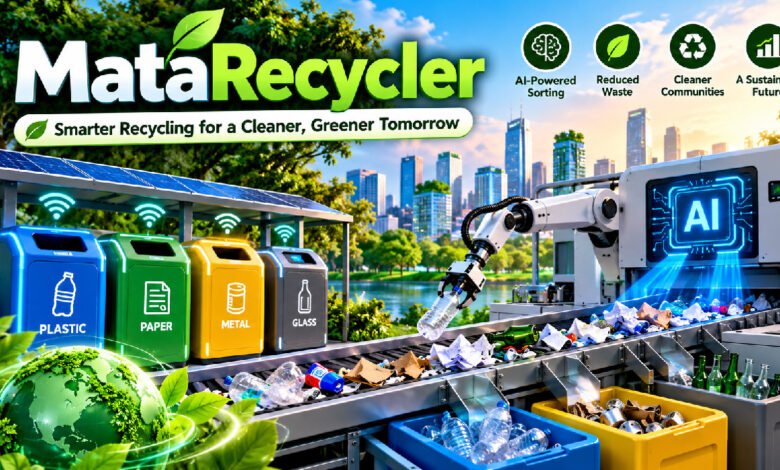
MataRecycler represents a modern approach to recycling at a time when waste is becoming a serious global problem. Cities are growing, consumption is increasing, and traditional recycling systems often struggle with contamination, slow sorting, and poor recovery of useful materials. These problems make waste management more expensive and less effective.
The idea behind MataRecycler is to combine recycling with artificial intelligence, automation, smart sensors, and digital monitoring. Instead of depending only on manual sorting, an intelligent system can recognize different materials, track waste levels, and help recycling facilities process waste more accurately. This can improve both efficiency and environmental performance.
MataRecycler also fits into the wider movement toward smart cities and sustainable development. Better recycling systems can help households, businesses, industries, and local governments reduce landfill waste and recover more useful materials. The main goal is simple: make recycling smarter, cleaner, faster, and easier to manage.
What Is MataRecycler?
MataRecycler can be understood as a smart recycling concept that uses modern technology to improve waste collection, sorting, tracking, and processing. It connects digital software with recycling operations so waste can be managed in a more organized way. Artificial intelligence and smart sensors are important parts of this approach.
Traditional recycling often depends heavily on people separating waste correctly before it reaches a processing facility. Mistakes can cause contamination, which lowers the quality of recyclable material. MataRecycler aims to reduce these problems by using automated detection and classification systems that can identify different types of waste more consistently.
The system can support the handling of materials such as plastic, metal, paper, glass, and electronic waste. It may also provide data about recycling activity, collection patterns, and material recovery. This makes MataRecycler useful as a broader waste-management system rather than simply a tool for separating rubbish into different containers.
How MataRecycler Works
MataRecycler follows a structured process that begins when waste enters a collection or recycling system. Smart containers or normal waste collection points can gather materials before they are moved to a processing location. Sensors and connected systems can also provide information about how much waste has been collected.
Once materials reach the sorting stage, cameras, sensors, and artificial intelligence can examine individual items. The technology can identify characteristics such as shape, color, texture, and material type. Different waste streams can then be separated so recyclable items continue through processing while unsuitable materials are removed.
After sorting, recyclable materials can be cleaned, prepared, and sent for further processing or manufacturing. Digital systems may record how much material was recovered and how much was rejected. This creates a more organized recycling cycle in which collection, sorting, processing, reporting, and reuse are connected through technology and data.
Artificial Intelligence in MataRecycler
Artificial intelligence is one of the most important technologies connected with MataRecycler. Recycling facilities receive many different materials at the same time, and identifying every item correctly can be difficult for human workers. AI systems can examine waste quickly and classify it according to patterns learned from large amounts of visual information.
Computer vision allows cameras to capture images of materials moving through a recycling line. Software then studies features such as size, shape, color, and texture. This can help the system distinguish paper from plastic, metal from glass, or one type of packaging from another before automated equipment separates the materials.
AI systems also have the ability to improve as better data becomes available. When recognition becomes more accurate, facilities can reduce sorting errors and contamination. This is important because cleaner recyclable materials usually have greater value and are easier to reuse. AI therefore supports both recycling efficiency and better material recovery.
Smart Sensors and IoT Technology
Smart sensors help MataRecycler collect information from bins, containers, recycling equipment, and processing systems. A sensor can monitor conditions such as how full a container is or how frequently waste is being added. This information can be shared through connected digital networks instead of relying only on manual inspections.
Internet of Things technology allows different recycling devices to communicate with central software. For example, a smart bin may send an alert when it reaches a certain capacity. Collection teams can then respond based on actual need rather than following the same schedule whether containers are empty or full.
This approach can improve planning and reduce unnecessary journeys. Fewer unneeded collection trips may lower fuel use, operating costs, and vehicle emissions. At the same time, full containers can be collected before they overflow. IoT technology therefore helps MataRecycler connect physical waste infrastructure with real-time digital information for more efficient daily management.
Automated Waste Sorting
Sorting is one of the most difficult stages in recycling because mixed waste can contain many materials with different properties. MataRecycler uses automated sorting technology to make this stage faster and more consistent. Machines can examine waste moving along processing lines and identify materials that should be separated.
Automated systems can work with cameras, sensors, robotic equipment, and AI software. Once a material is recognized, the system can direct it toward the correct processing stream. Plastics, metals, paper, glass, and other materials can therefore be separated without relying entirely on people making every sorting decision.
This reduces the chance that valuable recyclable materials will be lost because they were placed in the wrong category. Automation can also support workers by handling repetitive sorting tasks while staff focus on supervision and quality control. Better sorting ultimately helps recycling facilities produce cleaner material streams and recover more useful resources.
Real-Time Recycling Data and Analytics
Modern waste management depends on information as well as physical equipment. MataRecycler can collect data about recycling volumes, material types, contamination, collection activity, and processing performance. This information can be shown through digital dashboards that help managers understand what is happening across their recycling system.
Real-time reporting allows organizations to identify problems earlier. If a particular area produces unusually high contamination, managers can investigate the cause. If certain bins fill faster than others, collection schedules can be adjusted. Recycling data can therefore support practical decisions instead of depending only on estimates or fixed routines.
Historical information is also valuable because it reveals longer-term patterns. Businesses and municipalities can compare recycling performance over different periods and measure whether new programmes are working. Data analytics makes waste management more transparent and can help organizations set realistic targets for reducing landfill use, improving recovery rates, and controlling operating costs.
Environmental Benefits of MataRecycler
One of the main reasons for improving recycling technology is to reduce the environmental impact of waste. When recyclable materials are not properly recovered, they may be sent to landfills or incineration facilities. Better sorting and processing can increase the amount of useful material that remains within recycling systems.
Reducing landfill dependence can help limit environmental pressure associated with large waste-disposal sites. Recycling also supports the conservation of raw materials because recovered paper, metals, glass, and plastics can sometimes replace part of the demand for newly produced materials. This can reduce the resources required to manufacture products from the beginning.
Efficient recycling can also support lower energy use in some industries. Aluminium recycling, for example, requires far less energy than producing aluminium from raw ore. Paper recycling can conserve trees and water. MataRecycler supports these environmental goals by helping more recyclable materials enter suitable recovery and reuse processes.
Cost and Operational Advantages
Waste collection and recycling can be expensive because they require vehicles, workers, processing equipment, fuel, storage areas, and disposal services. MataRecycler can improve operational efficiency by using automation and digital information to reduce unnecessary work. Better planning can help organizations use their equipment and staff more effectively.
Smart bins can reduce unnecessary collection trips by showing when waste actually needs to be collected. Automated sorting can increase processing speed and reduce dependence on purely manual separation. Improved material quality can also reduce the number of contaminated loads that must be rejected or sent to landfill.
The financial benefit depends on the size and design of each recycling system, so savings will not be identical everywhere. Initial installation can also be costly. However, long-term improvements in collection planning, sorting efficiency, material recovery, and data management can make smart recycling valuable for municipalities, recycling facilities, and businesses managing large amounts of waste.
MataRecycler and the Circular Economy
The circular economy is based on keeping materials in use for as long as possible instead of quickly turning products into waste. Traditional economic systems often follow a simple pattern: resources are extracted, products are manufactured, items are used, and waste is discarded. Recycling can help create a more circular process.
MataRecycler supports this model by improving the recovery of usable materials from waste streams. When plastics, metals, glass, paper, and other recyclable materials are sorted correctly, they have a better chance of being processed and returned to production. Cleaner recycling streams can make recovered materials easier for manufacturers to use.
This creates a cycle in which some materials move from use to collection, processing, recovery, and reuse rather than going directly to disposal. MataRecycler does not remove the need to reduce consumption, but it can strengthen the recovery stage. That makes smart recycling an important part of broader circular-economy strategies.
Applications of MataRecycler
MataRecycler can be useful in several different waste-management environments. Residential communities can use smart containers and digital recycling information to make household sorting easier. Sensors can help collection teams understand when neighborhood bins require attention and where waste volumes are increasing.
Businesses and industrial facilities can use intelligent recycling systems to monitor larger waste streams. Factories, offices, shopping centers, and commercial buildings often produce significant amounts of packaging, paper, plastics, metals, and other materials. Better monitoring can help these organizations understand their waste patterns and improve internal recycling processes.
Municipal governments can also integrate MataRecycler-style technology into public waste services. Smart public bins, automated sorting facilities, route planning, and central dashboards can work together to improve city-wide recycling. Educational institutions and community organizations can use the same technology to support recycling awareness and encourage more responsible waste habits.
MataRecycler and Smart Cities
Smart cities use connected technology and data to improve public services, infrastructure, and daily urban management. Waste collection is an important part of this system because large cities must manage enormous amounts of material every day. MataRecycler can connect recycling operations with wider smart-city networks.
Public recycling containers can contain sensors that monitor fill levels and send information to a central platform. Collection vehicles can use updated waste information when planning routes. Municipal teams can then focus their resources on areas that actually require service instead of treating every location in exactly the same way.
Central dashboards can also help city managers see recycling performance across different neighborhoods. This information can reveal areas where contamination is high, collection demand is increasing, or recycling participation needs improvement. When combined with public education and suitable recycling infrastructure, smart technology can make city waste management more responsive, measurable, and efficient.
MataRecycler Compared With Traditional Recycling
Traditional recycling systems usually depend heavily on manual collection, fixed schedules, human sorting, and limited real-time information. These methods can still work, but they may struggle when waste volumes become very large or when recycling streams contain many different materials. Human workers can also become tired during repetitive sorting tasks.
MataRecycler introduces automation, artificial intelligence, sensors, and digital monitoring into the same process. Instead of relying only on visual inspection by workers, technology can help identify and separate materials. Connected bins and dashboards can also provide information that traditional systems may not collect in real time.
However, smart recycling should not be seen as a complete replacement for people. Workers are still needed to operate facilities, maintain equipment, check quality, and manage unusual materials. The main difference is that MataRecycler can support these workers with better tools, faster information, and automated systems that improve consistency across recycling operations.
Challenges and Limitations of MataRecycler
MataRecycler offers important advantages, but smart recycling technology also has limitations. Advanced cameras, sensors, software, robotic equipment, and connected infrastructure can require significant investment. This can make adoption more difficult for communities or organizations with limited budgets, especially where basic recycling services are still developing.
Technology also requires maintenance and skilled people. Sensors can fail, machines need repairs, and AI systems may classify some materials incorrectly. Recycling rules can also differ between regions, which means a system may need to be adjusted according to local facilities, waste types, and regulations instead of using exactly the same setup everywhere.
Another challenge is that technology cannot solve poor recycling habits by itself. People must still place materials in suitable containers and follow local rules. Successful implementation therefore requires a combination of infrastructure, education, technical expertise, maintenance, suitable funding, and continued public participation.
How MataRecycler Can Improve Recycling Habits
Confusion is one of the common barriers to better household recycling. People may want to recycle but remain unsure about which materials belong in different containers. Recycling rules can also change between cities, which makes the process difficult for residents who do not receive clear information.
Digital tools connected with MataRecycler can make recycling instructions easier to understand. Mobile information, visual guides, reminders, alerts, and local collection details can help people make better decisions before throwing materials away. Clear information can reduce mistakes that later create contamination at processing facilities.
Schools, workplaces, local governments, and community groups can also use smart recycling programmes for education. People are more likely to develop useful habits when they understand what happens to their waste and why correct sorting matters. Combining technology with public education can therefore strengthen both participation and the overall quality of recyclable materials collected.
Future of MataRecycler Technology
The future of intelligent recycling is likely to involve greater automation and more accurate material recognition. Artificial intelligence systems can continue improving their ability to identify different packaging types, plastics, metals, electronic materials, and newer forms of sustainable packaging. Better recognition could further reduce contamination in recycling streams.
Robotic sorting equipment may also become faster and more flexible. Predictive analytics could help recycling facilities estimate future waste volumes, while equipment-monitoring systems could warn operators about maintenance problems before serious failures occur. Smart collection networks may increasingly use live waste information when planning vehicle routes.
Renewable energy can also become more closely connected with recycling infrastructure, while improved digital reporting may help businesses and cities measure their environmental performance. The most useful future systems will likely combine machines, data, recycling infrastructure, and public participation rather than depending on one technology alone. MataRecycler reflects this wider direction toward smarter waste management.
Final Thoughts
MataRecycler represents a modern way of thinking about recycling and waste management. By combining artificial intelligence, smart sensors, automated sorting, IoT connectivity, and real-time data, the concept aims to make recycling more accurate and easier to manage. These technologies can support both large recycling facilities and local collection systems.
Its potential benefits include lower contamination, better material recovery, more efficient waste collection, stronger recycling data, and reduced pressure on landfills. MataRecycler can also support circular-economy goals by helping useful materials remain in production cycles instead of being discarded after a single use.
At the same time, smart technology requires investment, maintenance, suitable infrastructure, and responsible public participation. It works best when digital systems are combined with strong recycling programmes and clear education. As cities continue searching for cleaner waste solutions, intelligent recycling systems could become an increasingly important part of sustainable urban development.
Frequently Asked Questions
What is MataRecycler?
MataRecycler is a smart recycling concept that combines artificial intelligence, sensors, automation, and digital monitoring. It helps improve waste sorting, reduce contamination, track recycling activity, and recover more useful materials from waste streams.
How does MataRecycler work?
MataRecycler collects waste information through sensors and digital systems before materials enter the sorting process. AI, cameras, and automated equipment can identify different materials, separate recyclable items, and provide recycling data for better waste management decisions.
What technologies are used in MataRecycler?
MataRecycler can use artificial intelligence, machine learning, computer vision, IoT sensors, cloud systems, automated sorting equipment, and real-time data analytics. These technologies work together to make recycling faster, more accurate, and easier to monitor.
What are the main benefits of MataRecycler?
The main benefits include improved sorting accuracy, lower contamination, better material recovery, more efficient waste collection, and useful recycling data. It can also help organizations reduce unnecessary collection trips and improve their overall waste-management systems.
Can MataRecycler be used in smart cities?
Yes. MataRecycler can support smart-city waste systems through connected recycling bins, fill-level sensors, digital dashboards, automated sorting, and collection-route planning. These tools can help cities manage growing waste volumes more efficiently.
How does MataRecycler help the environment?
MataRecycler can help more recyclable materials stay out of landfills by improving collection and sorting. Better material recovery can also reduce demand for some new raw materials while supporting recycling, resource conservation, and circular-economy goals.
What are the challenges of using MataRecycler?
MataRecycler may require significant investment in sensors, software, equipment, maintenance, and skilled workers. AI systems can also make mistakes, and recycling rules differ between regions. Successful use therefore depends on suitable infrastructure, public participation, and proper management.





2 Comments