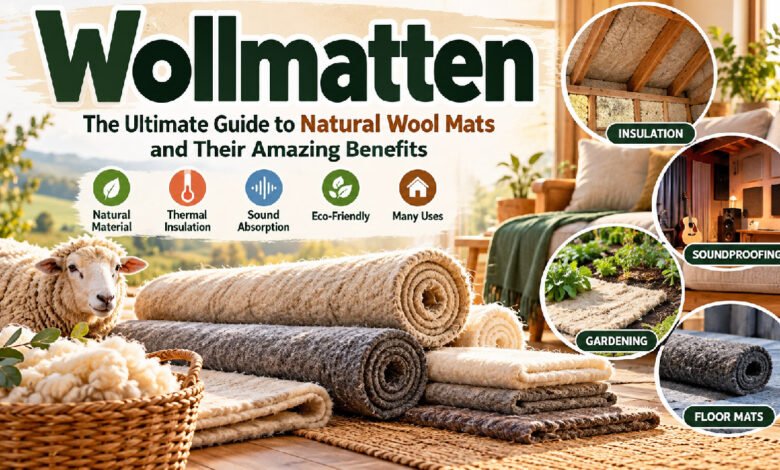
Wollmatten are mats made fully or partly from wool. The word comes from German, where “Wolle” means wool and “Matten” means mats. The singular form is Wollmatte. It describes a broad product category rather than one specific branded product.
These mats can look very different depending on their purpose. Some are soft coverings designed for floors, while others are dense felt sheets. Technical versions can provide insulation, sound control, surface protection, gardening support, or comfortable spaces for relaxation activities.
Sheep’s wool is the material most commonly associated with Wollmatten, but every product is not necessarily pure wool. Some contain cotton, synthetic fibres, adhesives, backing, dyes, or protective treatments. Checking the complete material information is therefore important before purchasing.
What Are Wollmatten Made From?
Natural sheep’s wool is commonly used because its fibres are flexible, resilient, and naturally wavy. Those characteristics make wool useful for products requiring warmth, cushioning, texture, or insulation. Different grades of wool can create noticeably different levels of softness and firmness.
Some manufacturers combine wool with other fibres to change strength, price, shape, or performance. A mat might include synthetic fibres or another natural material. These additions do not automatically make the product poor, but they change its properties and environmental characteristics.
Backing is another important part of many Wollmatten. Manufacturers may add textile, latex, synthetic material, adhesive, or another supporting layer. Backing can improve grip and stability, although it may also affect cleaning requirements, recyclability, biodegradability, and suitable end uses.
How Wollmatten Are Made
There is no single manufacturing process used for every Wollmatte. The method depends on whether the finished product will become a rug, protective pad, insulation material, garden covering, or technical mat. Each process creates different textures, densities, and performance characteristics.
Felting joins wool fibres together through moisture, movement, pressure, heat, or related processes. Needle punching uses special needles to mechanically entangle loose fibres. Both methods can produce stable sheets, although manufacturers can adjust their thickness and density for different practical applications.
Other Wollmatten can be woven, tufted, or compressed. Woven mats use interlaced wool yarn, while tufted products insert yarn into backing. Compressed fibres can create firm technical materials. The manufacturing method therefore strongly influences how the finished mat performs during use.
Main Types of Wollmatten
Decorative Wollmatten include floor mats, rugs, and other textile coverings intended mainly for indoor spaces. They can make bedrooms, living rooms, offices, and reading areas feel warmer and softer while adding natural texture to wood, stone, concrete, or tiled floors.
Felt Wollmatten are generally flatter and denser. They can protect desks, shelves, tables, furniture, equipment, and delicate surfaces from direct contact or scratching. Similar wool materials can also appear in craft projects, workshops, acoustic products, and other specialized practical applications.
Technical Wollmatten include products created for building insulation, sound management, gardening, or protective purposes. Some manufacturers also produce wool surfaces for meditation and slower yoga practices. These categories are different, meaning one type should not automatically replace another type safely.
How Wollmatten Provide Insulation
Wool fibres have a naturally crimped, or wavy, structure. When many fibres sit together, small spaces form between them and hold still air. These air spaces can slow heat movement, helping suitable wool products provide useful thermal insulation and warmth.
Insulation performance is not determined by wool alone. Thickness, density, construction, installation quality, and overall product design affect how well an insulation mat works. A thin decorative floor mat therefore cannot provide the same performance as purpose-made building insulation material.
Technical wool insulation may be designed for walls, roofs, ceilings, floors, timber frames, or cavities. Buyers should examine documented thermal properties, fire performance, density, thickness, moisture behaviour, and installation instructions before selecting Wollmatten for any regulated building or construction project.
Wollmatten for Sound and Acoustic Comfort
Wool-based materials can absorb some sound energy rather than reflecting everything back into a room. This characteristic can help soften the acoustic environment of spaces containing hard floors, bare walls, glass, concrete, and other surfaces that normally create noticeable sound reflections.
Acoustic Wollmatten may be useful in offices, meeting spaces, music rooms, studios, home cinemas, or residential interiors. Their effectiveness depends on factors including material density, thickness, placement, construction, and surrounding surfaces, so performance can differ considerably between individual wool products.
A normal decorative wool rug should not be described as complete soundproofing. It may help reduce certain reflections or echoes, but professional acoustic control requires careful planning. When measurable acoustic performance matters, tested product specifications are more reliable than general marketing descriptions.
Wollmatten in Homes and Interior Design
Wollmatten can bring warmth, softness, and texture into interior spaces. They are particularly useful where hard flooring makes a room feel cold or visually plain. Wool can complement wood, stone, ceramic, and concrete while fitting traditional or modern interior design styles.
In bedrooms, a wool mat can provide a softer surface beside the bed. In living rooms, a larger mat can visually connect seating and furniture. Smaller Wollmatten can define reading corners, workspaces, entrances, or other specific areas without changing permanent flooring.
Appearance varies according to wool quality, construction, colour, texture, pile, and finishing method. Smooth felt creates a different look from thick woven wool. Because the category is broad, buyers can find understated, rustic, handcrafted, decorative, or contemporary Wollmatten for interiors.
Wollmatten for Gardens and Plants
Some Wollmatten are manufactured specifically for gardening and horticultural applications. Wool-based garden mats can be positioned around plants, shrubs, trees, containers, or garden beds. Depending on their design, they can create a protective layer over or around exposed soil.
Suitable garden mats may help reduce moisture loss from the soil and limit some unwanted plant growth by covering the surface. Wool products can also provide insulation around pots and plant containers, which may be useful when vegetation faces colder seasonal conditions.
Gardeners should confirm that a particular Wollmatte is actually intended for outdoor or soil use. Pure wool can biodegrade under suitable conditions, but products containing synthetic fibres, adhesives, coatings, backing, or treatments may behave differently and require different disposal methods.
Wollmatten for Yoga and Meditation
Wool mats can provide a warm and comfortable surface for meditation, relaxation, Yoga Nidra, restorative yoga, and slower floor-based practices. Their natural textile feel can be appealing when cushioning and warmth are more important than highly engineered traction or water resistance.
Not every wool mat is suitable for active exercise. Fast movements and sweaty practices require reliable grip to reduce unwanted movement. A soft decorative Wollmatte may not offer sufficient traction, especially when it lacks a purpose-designed non-slip backing or exercise surface.
People choosing Wollmatten for wellness activities should examine size, thickness, cushioning, surface texture, backing, cleaning requirements, and grip. The product should match the intended activity instead of being selected simply because wool feels comfortable or has an attractive natural appearance.
Benefits of Wollmatten
Warmth is one of the best-known characteristics associated with wool. Its fibre structure can hold small pockets of air, while its natural elasticity helps quality products recover from ordinary compression. These characteristics support wool’s long history in carpets and interior textiles.
Wool can absorb and release moisture vapour as surrounding conditions change. This characteristic can help it interact with indoor humidity, although moisture management should never be confused with waterproofing. Wollmatten should still be protected from unsuitable or prolonged exposure to liquid water.
Another advantage is versatility. Wool can become a decorative floor covering, protective felt, garden material, acoustic product, insulation mat, craft surface, or wellness mat. However, the benefits available from each Wollmatte depend greatly on its construction, thickness, density, and intended purpose.
Drawbacks and Limitations of Wollmatten
Wollmatten also have limitations. High-quality wool products can cost more than basic synthetic alternatives, particularly when they use carefully selected fibres or specialized manufacturing. Some new mats can shed loose fibres, while coarse wool may feel rough against sensitive skin.
Wool is not naturally waterproof, so prolonged dampness can create problems. Incorrect washing may cause shrinking, distortion, stains, backing damage, or unwanted odours. Untreated wool can also be vulnerable to textile pests, particularly when products are stored for extended periods improperly.
Natural wool has useful resistance to ignition compared with many materials, but this does not mean every Wollmatte is fireproof. Construction products need appropriate performance information. Similarly, technical treatments may be present, so wool products should not automatically be called chemical-free.
Wollmatten and Sustainability
Wool is a renewable natural fibre because sheep can grow new fleece after shearing. Pure untreated wool can also break down under suitable environmental conditions. These characteristics can make wool attractive to people seeking alternatives to products made mainly from synthetic materials.
However, sustainability depends on more than the main fibre. Sheep farming, processing, water use, energy, transportation, dyes, protective treatments, manufacturing, durability, and disposal all contribute to environmental impact. A complete product assessment therefore gives a clearer picture than material alone.
Backing and additional components are especially important. A Wollmatte containing plastic, synthetic fibres, adhesives, coatings, or other materials may not biodegrade like untreated wool. Buyers interested in environmental performance should examine composition, sourcing information, durability, certifications, and disposal instructions carefully.
Wollmatten vs Synthetic Mats
Synthetic mats are commonly made using manufactured materials such as polyester, polypropylene, rubber, foam, or similar polymers. Depending on their design, they can offer low prices, predictable grip, simple cleaning, strong water resistance, or specialized performance for demanding environments and applications.
Wollmatten provide a different combination of qualities. Wool generally offers natural textile texture, warmth, resilience, moisture-vapour interaction, and potential biodegradability when untreated and free from incompatible materials. Its disadvantages can include higher prices, gentler maintenance, and weaker resistance to prolonged wetness.
Neither category is automatically better for every situation. A synthetic mat may make more sense in a wet environment, while wool may suit an interior requiring warmth and natural texture. Purpose, moisture, maintenance, durability, price, and performance should guide the decision.
How to Choose the Right Wollmatte
Begin by deciding exactly what the mat needs to accomplish. Flooring, insulation, gardening, meditation, sound control, furniture protection, and crafts require different characteristics. Defining the application first prevents buyers from choosing an attractive product that performs poorly for their actual needs.
Next, examine the complete composition, dimensions, thickness, density, construction, backing, and care instructions. A label mentioning wool does not prove that every component is wool. These details can affect comfort, grip, strength, cleaning, durability, biodegradability, and suitability for particular environments.
Technical applications require even greater attention to specifications. Insulation or acoustic Wollmatten should be chosen using documented performance information rather than appearance alone. Relevant thermal values, fire ratings, density, installation requirements, and local building rules should be considered whenever they apply.
How to Clean and Care for Wollmatten
Care requirements vary because Wollmatten are made in many different ways. The manufacturer’s instructions should always come first. For ordinary interior wool mats, gentle vacuuming can remove surface dirt, although excessively powerful suction may pull loose fibres from certain constructions.
When liquid spills occur, gently blotting the area is usually preferable to aggressive rubbing. Strong chemicals, bleach, excessive heat, and unnecessary soaking can damage some wool fibres, dyes, adhesives, or backing materials. Wet mats should be allowed to dry thoroughly afterward.
Before storing a Wollmatte, make sure it is clean and completely dry. Storage areas should also remain dry and protected from textile pests. Large, valuable, handmade, or heavily stained wool mats may benefit from professional cleaning instead of experimental home treatments.
Final Thoughts
Wollmatten is best understood as a broad German term for wool mats rather than one standardized product. These mats range from simple decorative floor coverings and protective felt to specialized materials designed for insulation, acoustic comfort, gardening, crafts, and wellness activities.
Wool provides useful qualities including warmth, resilience, cushioning, moisture-vapour interaction, natural texture, and sound-absorbing potential. At the same time, wool is not automatically waterproof, biodegradable, chemical-free, maintenance-free, or suitable for every technical application simply because it is natural.
The best Wollmatte is therefore the product whose construction matches its intended job. Check materials, thickness, density, backing, care requirements, moisture conditions, and technical specifications before buying. Understanding these details makes comparing different Wollmatten much easier and more meaningful.
(FAQs)
What are Wollmatten used for?
Wollmatten can be used for flooring, thermal insulation, sound control, gardening, meditation, crafts, furniture protection, and other practical purposes. The correct use depends on the mat’s material, thickness, density, construction, and design.
Are Wollmatten made from 100% wool?
Not all Wollmatten contain 100% wool. Some products combine wool with synthetic fibres, cotton, adhesives, backing materials, dyes, or protective treatments. Check the complete material description when pure wool is important to you.
Are Wollmatten good for insulation?
Certain Wollmatten are specifically manufactured for thermal insulation. Wool fibres can trap small pockets of air that help slow heat movement. Building insulation products should still be selected according to tested specifications and local construction requirements.
Are Wollmatten environmentally friendly?
Wool is a renewable natural fibre, and untreated pure wool can biodegrade under suitable conditions. However, the environmental impact of Wollmatten also depends on farming, manufacturing, transportation, durability, backing, synthetic materials, treatments, and eventual disposal.
How long do Wollmatten last?
Quality Wollmatten can remain useful for many years when correctly maintained. Their lifespan depends on wool quality, construction, density, usage, foot traffic, moisture exposure, cleaning methods, and storage conditions. There is no single lifespan for every wool mat.