

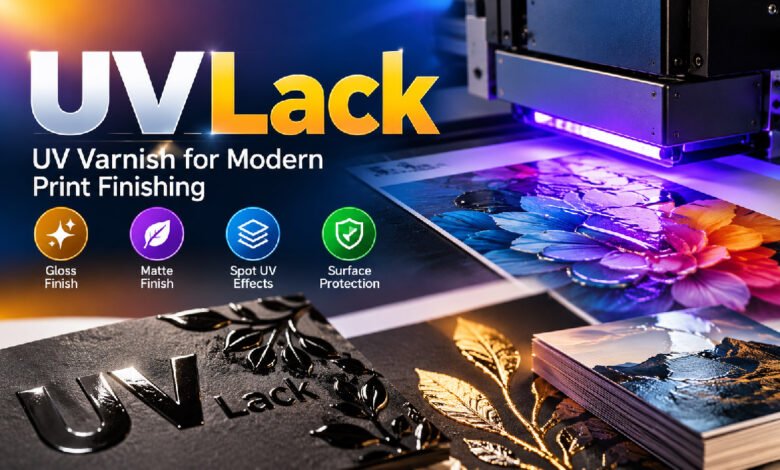
UVLack is a term connected with UV-curable varnish used in modern printing and surface finishing. This special coating uses ultraviolet energy to cure quickly, creating an attractive surface that can improve the appearance and handling performance of printed materials.
Unlike coatings that need longer drying periods, UV varnish changes from a liquid coating into a solid film after suitable ultraviolet exposure. This rapid curing process can help commercial printers maintain efficient production while producing glossy, matte, or specialized decorative surfaces.
UVLack and similar UV varnish products can be used for packaging, brochures, business cards, book covers, labels, promotional materials, and other printed products. Depending on the formulation and equipment, the coating may cover an entire surface or selected design areas.
This guide explains UVLack in simple terms, including how UV varnish works, its common applications, finish options, production requirements, benefits, limitations, and differences from other coatings. It also explains important points businesses should consider before choosing UV finishing.
What Is UVLack?
UVLack generally refers to a UV-curable varnish used for print finishing. Instead of behaving like a traditional coating that depends mainly on evaporation or oxidation, UV varnish is formulated to react when it receives suitable ultraviolet energy during the production process.
The coating contains reactive components designed to form a solid film during curing. Photoinitiators play an important role in many conventional UV formulations. They absorb suitable UV energy and help begin chemical reactions that rapidly transform the applied liquid layer.
UVLack should not be confused with printing ink itself. Printing inks normally create the text, photographs, colors, and graphics. Varnish is applied as an additional finishing layer to change surface appearance, add visual contrast, or provide useful resistance against everyday handling.
The exact properties of any UVLack product depend on its formulation and intended application. Gloss, viscosity, film thickness, adhesion, curing requirements, and substrate compatibility can differ. Printers should therefore follow the technical information provided for the specific coating they plan to use.
How Does UVLack Work?
The process begins when the varnish is transferred onto a suitable printed or unprinted surface. Depending on the printing system, application may involve rollers, coating units, screens, plates, or other equipment capable of producing the required coating thickness and coverage.
After application, the wet coating moves through an appropriate UV-curing system. Ultraviolet energy interacts with the coating chemistry and starts rapid polymerization or cross-linking reactions. The liquid layer consequently develops into a solid, cured film attached to the underlying printed material.
This process is considerably different from simply allowing a wet coating to sit in open air. Properly configured UV systems can achieve curing very quickly, although actual curing performance depends on formulation, lamp technology, energy output, production speed, and coating thickness.
Correct curing is essential. Too little energy can leave a coating insufficiently cured, while unsuitable process settings may affect adhesion or surface properties. Professional printers therefore control application weight, machine speed, UV output, substrate condition, and other variables throughout production.
Why Is UVLack Used in Printing?
One major reason printers use UVLack is visual improvement. A suitable varnish can change how light reflects from printed material. High-gloss finishes can make selected artwork appear brighter, while matte surfaces can produce a softer and more understated appearance.
Another advantage is production speed. Because UV-curable varnishes are designed to harden rapidly under appropriate radiation, finished sheets can often proceed toward subsequent production operations without the lengthy drying periods associated with some conventional finishing methods.
A properly selected cured coating can also provide useful resistance to rubbing and handling. This feature can be valuable for printed pieces that are frequently touched, transported, stacked, displayed, or distributed. However, protection levels depend strongly on the complete coating system.
UV varnish also gives designers additional creative possibilities. Instead of treating finishing only as protection, they can make it part of the visual design. Different gloss levels, selective applications, textures, and raised effects can draw attention toward important elements.
Full UV Coating and Spot UVLack
Full-surface UV coating places varnish across most or all of the printable area. It is commonly selected when designers want a consistent appearance across a piece. Depending on the formulation, the finished surface may have strong gloss or another controlled appearance.
Spot UV uses a different approach. Varnish is applied only to selected areas instead of covering the complete surface. Designers may highlight a company logo, photograph, product name, pattern, headline, illustration, or another important element within the printed design.
Contrast is what makes spot UV especially noticeable. For example, a glossy detail placed against a lower-gloss or matte background can catch light differently. The viewer notices this change as the printed item moves, giving otherwise flat artwork greater visual interest.
Successful spot finishing requires accurate production. The varnish needs to align correctly with the printed artwork, particularly around small letters and detailed graphics. Registration errors become noticeable when a shiny coating does not properly match the design underneath it.
Gloss, Matte, and Raised UV Effects
Gloss UV varnish produces a reflective surface and is one of the most recognizable finishing options. It can work particularly well with photographs, bold graphics, dark backgrounds, packaging details, and promotional materials where designers want stronger reflections and visual impact.
Matte UV coatings aim for lower surface reflection. Instead of producing an obvious shine, they can create a more restrained appearance. Matte effects are often considered when excessive glare would interfere with the desired design or when a softer presentation is preferred.
Raised or relief UV effects use greater coating build to create noticeable surface depth. Rather than being experienced only visually, selected elements can also become tactile. Logos, lettering, patterns, symbols, and decorative details may therefore stand above surrounding areas.
Not every UVLack formulation or printing machine can produce every effect. Creating substantial film thickness may require specialized application methods and suitable curing capacity. Printers should test the intended combination of varnish, substrate, equipment, artwork, and production settings before manufacturing.
Where Can UVLack Be Used?
UV varnish has applications across commercial printing because many products benefit from stronger visual presentation. Business cards, postcards, brochures, folders, invitations, book covers, promotional cards, presentation materials, and other printed pieces may use full or selective UV finishing.
Packaging is another important application area. A designer can use selective UV effects to emphasize a brand name, product image, graphic pattern, or other important information. This creates contrast without necessarily applying the same visual effect across the complete package.
Labels and premium promotional materials may also benefit from UV finishing when the chosen substrate and production system are compatible. In these applications, surface effects can support branding by making certain design elements easier to notice under changing lighting conditions.
However, UVLack should never be selected based on appearance alone. The final product may require folding, cutting, creasing, gluing, stamping, writing, overprinting, or other operations. Compatibility with these later processes should be considered before the varnish specification is finalized.
Benefits of UVLack
Rapid curing is one of the strongest practical advantages of UV technology. Once the coating receives sufficient curing energy, it can form a solid film quickly. This can reduce production waiting periods and support efficient movement into appropriate post-press operations.
Visual flexibility is another benefit. Printers can use suitable UV varnishes to produce glossy surfaces, lower-gloss finishes, selective contrasts, and specialized effects. This makes the coating useful for both functional finishing and creative design across many types of printed communication.
UV varnish can also add useful surface resistance. Printed materials are regularly exposed to stacking, transportation, fingers, packaging operations, and general handling. A correctly specified coating can help protect the underlying printed surface against certain forms of scuffing and abrasion.
These advantages are not automatic for every job. Performance depends on coating chemistry, substrate, ink system, film thickness, curing conditions, equipment, and subsequent processing. Testing remains important whenever a printer introduces an unfamiliar material or demanding finishing specification.
Limitations of UVLack
UVLack requires compatible curing and coating equipment. A business cannot simply apply a UV-curable product and expect it to perform correctly without appropriate processing. The coating needs controlled application and enough suitable curing energy to achieve its intended final properties.
Substrate compatibility can also create challenges. Paper, coated stock, synthetic materials, films, inks, and previously treated surfaces do not necessarily behave identically. Surface energy, absorbency, ink condition, and other properties can influence wetting, adhesion, appearance, and overall finishing quality.
Heavy coating areas may create additional production considerations around folding, creasing, cutting, or other post-press processes. A visually attractive finish is not useful if it interferes with later manufacturing. Production planning should therefore cover the complete journey of the printed piece.
UV technology also requires appropriate operational and safety controls. UV curing equipment should be operated according to manufacturer guidance, including relevant shielding, ventilation, maintenance, and exposure controls. Staff should follow applicable workplace procedures for both equipment and coating materials.
UVLack vs Aqueous Coating and Lamination
Aqueous coating is a water-based finishing method widely used in printing. It is often applied over broad areas to provide surface protection and a controlled appearance. Its chemistry and drying mechanism differ from UV-curable varnish, so production requirements also differ.
UV varnish is particularly attractive when rapid curing or strong decorative contrast is required. Spot applications can highlight precise design elements, while suitable systems may create substantial gloss or raised effects. These characteristics make UV finishing popular for visually distinctive print projects.
Lamination is different because a separate film is bonded to the printed surface. It can provide substantial physical protection and a distinctive feel. Depending on the material selected, laminates are available in gloss, matte, soft-touch, and other specialized surface options.
No finishing method is universally superior. A printer should choose according to appearance, protection requirements, budget, substrate, production quantity, post-press operations, recyclability considerations, and intended use. In some premium designs, more than one finishing technology may even be combined.
Important Factors Before Choosing UVLack
The first consideration should be the desired result. A business looking for general surface finishing has different requirements from one wanting a glossy logo on a matte background. Defining the visual and functional goal makes selecting an appropriate varnish easier.
Substrate selection comes next. Coated paper, uncoated paper, board, and synthetic substrates have different surface characteristics. Printers should verify whether the chosen UVLack is recommended for the specific stock, ink system, and printing process involved in the project.
Curing capability must also be checked carefully. Lamp type, UV output, coating thickness, and press speed can influence cure. Modern UV production can involve different curing technologies, so the varnish and curing source should be technically compatible rather than assumed compatible.
Finally, consider everything that happens after coating. Folding, creasing, die cutting, foil stamping, gluing, binding, packaging, and writing requirements can affect the finishing decision. Testing a representative sample before a large production run can identify compatibility problems early.
How to Get Better Results With UV Varnish
Start with artwork designed specifically for the intended finish. Spot UV areas should have a clear purpose rather than being added randomly. Strategic placement on logos, photographs, typography, patterns, or product details can create stronger visual hierarchy without making the design overly busy.
Accurate registration is especially important with selective varnish. Small errors become obvious around fine text, narrow lines, and precisely shaped graphics. Designers and printers should therefore discuss tolerances and artwork requirements before the job reaches the final production stage.
Production testing is equally valuable. A representative proof or sample can reveal unexpected changes in gloss, adhesion, texture, color appearance, registration, and folding behavior. Identifying these issues before a complete run may prevent wasted stock, machine time, and additional finishing costs.
Good communication between designers, print buyers, prepress teams, press operators, and finishing specialists improves the final result. UVLack performs best when it is treated as part of the complete print specification rather than an effect added without considering manufacturing requirements.
Is UVLack Suitable for Every Print Project?
UVLack can be highly effective, but that does not make it necessary for every printed item. Simple documents, disposable materials, or projects with strict cost limits may not receive enough practical or visual benefit to justify specialized UV finishing.
Premium marketing materials can be stronger candidates. A business card, product package, brochure cover, invitation, or promotional piece may benefit when selective gloss or tactile detail helps important elements stand apart from the surrounding printed design and attract attention.
Practical use also matters. Products exposed to moisture, repeated cleaning, outdoor conditions, chemicals, or severe mechanical wear may need properties beyond those offered by a standard UV varnish. Specialized coatings or laminates may be more appropriate for demanding environments.
The best decision comes from balancing appearance, function, manufacturing, and cost. Instead of asking whether UV varnish is generally “better,” print buyers should ask whether a particular UVLack system provides the required performance for their specific application and substrate.
Final Thoughts
UVLack represents an important part of modern UV print finishing. By using UV-curable coating technology, printers can create surfaces that cure rapidly and offer a wide range of decorative possibilities, from broad glossy coverage to carefully positioned spot effects.
Its biggest attraction is the combination of production efficiency and visual flexibility. Depending on the coating system, UV varnish can improve gloss, create contrast, provide tactile effects, and add useful resistance against everyday handling of suitable printed products.
However, professional results require more than simply selecting a UV coating. Substrate compatibility, ink condition, coating thickness, application method, curing energy, registration, and later finishing operations can all determine whether the completed product performs and looks as expected.
For that reason, UVLack should be selected as part of the complete production plan. When designers and printers match the coating to suitable materials, equipment, artwork, and end-use requirements, UV varnish can provide an attractive and practical finishing solution.
(FAQs)
What is UVLack?
UVLack generally refers to UV-curable varnish used in print finishing. The liquid coating is applied to a suitable surface and cured using ultraviolet energy, producing a solid film with decorative or protective surface properties.
What is UV varnish used for?
UV varnish is used to change the appearance and surface properties of printed materials. Common applications include packaging, brochures, business cards, covers, promotional materials, labels, postcards, and other commercial print products.
What is the difference between spot UV and full UV coating?
Full UV coating covers most or all of a printed surface. Spot UV is applied only to selected areas, such as logos, headlines, images, or patterns, to create contrast with the surrounding surface.
How does UVLack dry?
UVLack does not rely on conventional air drying in the same way as many traditional coatings. A compatible UV-curable formulation reacts when exposed to an appropriate UV curing source, allowing the coating to harden rapidly.
Can UVLack create a raised effect?
Certain UV coating systems can create raised or relief effects by applying a greater coating build to selected areas. The required formulation, application equipment, artwork, and curing system must all support this type of production.
Is UV varnish the same as lamination?
No. UV varnish is a liquid coating that is cured on the surface. Lamination normally involves bonding a separate film to the printed material. Their appearance, protection, manufacturing requirements, and costs can therefore differ.
Does UVLack protect printed materials?
A properly selected and cured UV varnish can provide useful resistance against rubbing, scuffing, and normal handling. However, performance varies by formulation and application, and UV varnish should not automatically be treated as a replacement for heavy-duty lamination.
How do I choose the right UV finish?
Consider the desired appearance, substrate, printing method, ink system, curing equipment, coating thickness, budget, and post-press requirements. For unfamiliar materials or demanding applications, producing and evaluating a representative test sample is a sensible step.





One Comment